
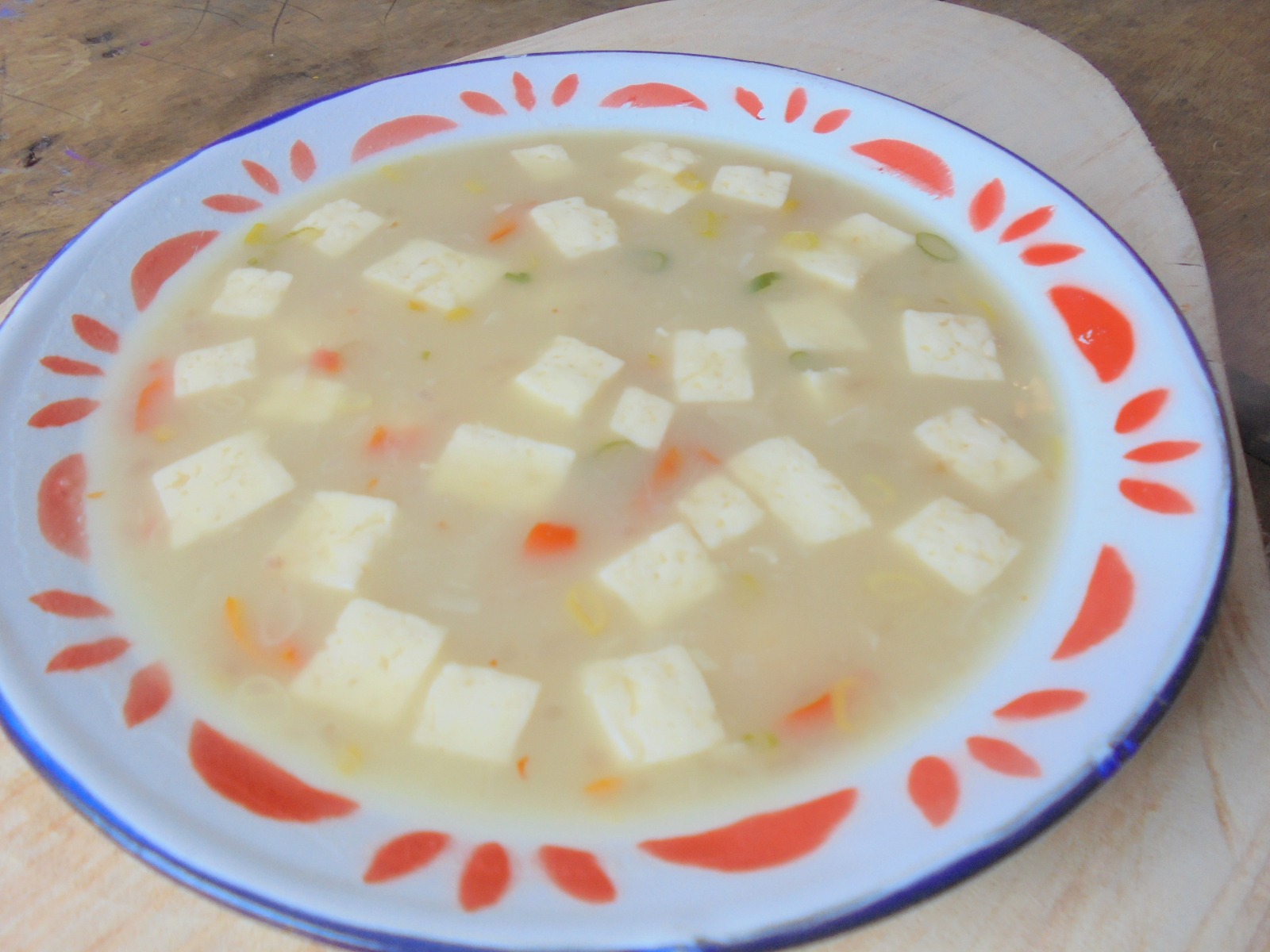
Colombian mote is not one simple dish. Ask someone from Córdoba or Sucre what belongs in a proper mote de queso and you may quickly find yourself in the middle of an argument: tomato or no tomato, suero costeño or no suero, bleo, cilantro, coconut milk. Everyone seems to know what the “authentic” version should be.
The problem is that Colombian culinary tradition tells a much more complicated story.
Claims such as “authentic mote does not contain tomato,” “it does not contain cilantro,” or “real mote is made this way” often begin with a perfectly legitimate experience: the recipe of a family, a municipality, or a local tradition. The difficulty comes when that experience is turned into a general rule for a preparation that exists in far more forms than any one person is likely to know.
Before deciding what an authentic mote should contain, therefore, we first need to answer a more basic question: what exactly is mote, and can we really speak of one single authentic recipe?
WHAT DOES THE WORD MOTE ACTUALLY MEAN?
Before discussing ingredients, we need to begin with the word itself. Enrique Otero D’Costa, in Mestizajes del castellano en Colombia, connects mute with the Quechua word muti and recalls the description attributed to Garcilaso, according to which Peruvians called cooked corn muti. This connection is also supported by the Diccionario de americanismos of the Association of Academies of the Spanish Language, which records mote, from Quechua mut’i, as a term for shelled and cooked corn in several Andean countries and, specifically in northern Colombia, also as the name of a dish prepared with yam or squash.
Ciro Bayo y Segurola, in his Vocabulario criollo-español sud-americano, also records a connection between mote and the French word mot. This reference, however, concerns a different development of the word. Spanish contains different homonyms: mote meaning a nickname, saying, or short expression is related to French or Occitan mot, while the American culinary term mote is connected to Quechua mut’i. We are therefore not choosing between two competing etymologies for the same food, but distinguishing between words that eventually came to share the same form while having different origins.
Things become especially interesting when this word of Andean origin, originally associated with corn, comes to designate very different preparations in the Colombian Caribbean. There we find mote as a thick soup based primarily on yam and diversified through numerous other ingredients: mote de ñame (yam mote), mote de queso (cheese mote), palm-heart mote, bleo golero mote, smoked moncholo fish mote, smoked catfish-head and blanquillo mote, catfish mote with coconut milk, bocachico mote, pigeon-pea mote, zaragoza bean mote, black-bean mote, black-eyed-pea mote, white-bean mote with salted pork head, among many other versions.
Along the Caribbean coast, we also find another use of the word mote associated with mashed or pounded preparations made from green bananas, squash, or yam itself. In Antonio Cacua Prada’s José Consuegra Higgins. Su vida y su legado, for example, there is a yam mote from Isabel López, a rural district of Sabanalarga, served with raw onion and small pieces of pickled green papaya. In Leonor Dangond Castro’s Raíces vallenatas, published in 1988, we find a squash mote made with chunks of cooked squash and ripe plantain. In Magdalena’s banana-growing region there are also references to mote de guineo, or cayeye, while in Huila, Caldas, and Antioquia the word can maintain a more direct relationship with peeled and cooked corn and, in some places, with mazamorra made from that corn.
All of this makes it difficult to argue that mote refers to a single recipe. It appears instead to be a word that has acquired different culinary meanings as it has moved across Colombia. Rather than asking which of these preparations deserves to be called mote, it is far more interesting to ask what characteristics allowed the same word to survive while the principal ingredient, consistency, accompaniments, and territory changed around it.
FROM CORN TO YAM: CARIBBEAN MOTE
The central ingredient in mote de queso and in many Caribbean versions of mote is yam. The varieties commonly associated with these preparations, particularly yams within the Dioscorea rotundata and Dioscorea cayenensis complex, are of African origin. Available botanical information allows us to state more precisely that the Guinea yams originated in West and West-Central Africa and were later introduced and cultivated in the Americas, including Colombia.
This is particularly interesting because it brings together, within the same dish, a word of Quechua origin and an ingredient whose botanical history leads us to West Africa. This fact does not by itself establish a complete genealogy for mote, but it does show the extent to which this cuisine is the product of movement, exchange, adaptation, and cultural transformation.
This clue inevitably leads to a comparison with West African fufu. In Ghana and other parts of West Africa, several forms of fufu are made from yam, plantain, cassava, or cocoyam, which are cooked and pounded into a smooth dough-like preparation usually served with soups or stews. In neighboring Panama, preparations known as fufú can also incorporate ingredients such as plantain, yam, coconut, or fish, while in Nigeria and other West African territories there are yam-based soups and dishes accompanied by dried fish, meat, and seasonings.
The similarity is worth examining, but it should not automatically be turned into a claim of direct descent. Sharing an ingredient, a texture, or even a pounding technique is not enough to prove that one preparation descends from another. There may have been African cultural transmission; techniques brought by enslaved populations may have been adapted in the Americas; Indigenous, African, and European knowledge may have blended; and culinary convergence can also occur when different communities work with similar ingredients and arrive at similar technical solutions.
The comparison with fufu is therefore useful as a line of inquiry, but not as a closed conclusion. What we can state with much greater confidence is that the yam underlying a significant part of this culinary tradition has a deeply African history.
MOTE DE CANDELA AND THE HISTORY OF COROZAL
Another important part of this history takes us to Corozal during Colombia’s Thousand Days’ War. According to an account attributed to Don Remberto Amador Pérez and subsequently reproduced in research concerning mote de queso, during the shortages and displacement caused by the war around 1900, yam would have been one of the few foods readily available. With few other ingredients at hand, it was reportedly cooked for a long time with water, salt, onion, and garlic until it became a thick preparation known as mote de candela.
The same source proposes that, as people once again gained access to additional ingredients, this preparation may have evolved into more elaborate forms and eventually become related to present-day mote de queso.
This story is extremely valuable as culinary memory and oral tradition, but there is not yet enough evidence to state that mote de queso was invented in Corozal in 1900. The source itself presents the connection as a possibility rather than as a conclusive documentary demonstration. It is therefore more prudent to describe mote de candela as a possible antecedent while preserving Don Remberto’s account in precisely that category.
The relationship between mote, Corozal, and the conditions created by the Thousand Days’ War has continued to appear in various forms of cultural dissemination, confirming the persistence of this memory even if this does not, by itself, establish its historicity.
“AUTHENTIC MOTE DOES NOT CONTAIN…”
The statement “authentic mote does not contain…” becomes especially problematic once we consider the number of documented variants. Mote de queso is probably the best-known preparation within this broader family of motes and, precisely for that reason, the one that generates the most arguments. Some people insist that it does not contain tomato; others reject cilantro; some believe that suero costeño should not be added to the pot; others regard bleo as essential.
Yet the available references reveal a much more varied reality: Sabanero-style mote de queso with bleo de chupa, cheese mote with eggplant, versions containing tomato, versions from Lorica containing coconut milk, versions from Montería using sweet pepper, mote with yam and cassava in Morroa, pigeon-pea and cheese mote, and versions containing salted meat and sweet pepper in different parts of Córdoba.
David Sánchez Juliao is indispensable to this discussion because his relationship with mote was far from incidental. The writer from Lorica spoke about the dish as a deeply identity-laden matter and used the differences between Córdoba and Sucre to show how a recipe could become a source of local pride and symbolic confrontation. One of his widely repeated anecdotes jokes that Sincelejo seems like another country because people there “eat differently”: the difference, according to the joke, is that in Sucre they put tomato in their mote.
Universidad Simón Bolívar has also discussed this aspect of his work, describing him as a self-proclaimed “expert on mote de queso” and emphasizing that he repeatedly spoke about the existence of multiple recipes and about the chauvinistic confrontations between municipalities in Sucre and Córdoba over which preparation was the best. Even a session of the Colombian Congress records a reference to this distinction attributed to Sánchez Juliao: the Córdoba and Sucre versions of mote were different because in Sucre tomato was added.
The video of David Sánchez Juliao is particularly valuable because it allows us to hear this debate through a voice deeply connected with Córdoba’s cultural identity. The reference from El Rincón de Ramón is also useful, although the age of the website may make the link unstable or unavailable.
The tomato discussion does not depend solely on Sánchez Juliao either. In De la costa con sabor. Lo mejor de la cocina costeña, Margarita Cepeda records a yam mote prepared with yam, tomato, onion, lemon, oil, and salt; the yam is cooked, drained, and mashed into a paste. This reference is particularly useful because it demonstrates that tomato appears in preparations called mote regardless of whether an individual family considers it appropriate for its own version of mote de queso.
Likewise, Sentipensando el Caribe documents a preparation containing tomato, cilantro, and spinach, evidence of the existence of a particular version rather than a claim that all motes should contain those ingredients.
We also find Montería preparations using sweet pepper and other sources that reinforce the conclusion that these variations have recognizable territorial distributions. Universidad Simón Bolívar records that in much of Córdoba the dish is prepared with yam, coastal cheese, garlic, and onion sofrito; in Sahagún there are versions containing eggplant; in the savannas of Sucre tomato is incorporated into the sofrito and bleo de chupa is also used, while other areas of Bolívar add scallions, chives, or even pork cracklings.
We are therefore not looking at recent distortions of a completely uniform formula but at a regional cuisine that has produced variations recognizable enough to be associated with particular territories.
Written documentation is accompanied by oral sources, which are fundamental when researching traditional cuisine. Members of our own family from Morroa have spoken to us about mote prepared with both yam and cassava. Our friend José Rafael Arrieta Vergara, who knows numerous versions of the dish, told us about pigeon-pea and cheese mote and reported knowing approximately seventeen different varieties of mote. Alfredo Castaño, a follower of El Toque Colombiano on social media, told us about preparations containing salted meat and sweet pepper in certain areas of Córdoba.
This kind of information is especially valuable because many domestic variations have never entered a cookbook or academic publication. Oral tradition does not replace written documentation, but it forms part of the documentation of traditional cuisines when we clearly identify who contributes the knowledge and the territory or experience from which it comes.
SO DOES MOTE CONTAIN TOMATO, CILANTRO, SUERO, OR BLEO?
The answer available after examining the sources is far less convenient than a simple yes or no: it depends on which mote, which territory, and which tradition we are talking about.
There is documentation of mote containing tomato. There are versions with bleo. There are records of eggplant, sweet pepper, coconut milk, suero costeño, and other variations. There is also a documented preparation containing tomato, cilantro, and spinach. The correct approach is not to turn each of these versions into a national rule, but to recognize that they exist and ask where they are prepared, who transmits them, and how they relate to other versions.
David Sánchez Juliao helps us understand this problem especially well. The opposition between the Sucre version containing tomato and the mote that many people in Córdoba consider correct without it does not prove that one is authentic and the other false; it demonstrates that food can become a way of marking territory.
Sánchez Juliao’s own mother is remembered in a cultural route through Córdoba for joking about the Corozal “idea” of putting tomato in mote, an anecdote that shows just how much an ingredient can function as a marker of regional identity. If a family in Córdoba says it has never made mote with tomato, that culinary memory is real. If a family in Sucre has been adding it for generations, that tradition is real as well. What we cannot do is use one of those memories to erase the other.
The same applies to cilantro. The existence of a specific preparation that uses it is evidence that such a version exists, but it does not by itself demonstrate that the practice is widespread, ancient, or characteristic of an entire region. Answering those questions requires independent testimonies, local cookbooks, historical references, and more precise territorial identification.
The distinction between proving that a variant exists and determining the place it occupies within a tradition is fundamental when documenting traditional cuisine.
AUTHENTICITY AND DIVERSITY
The main problem, then, lies in how we use the word authentic. A preparation may be authentic within a particular family, municipality, or regional tradition without automatically becoming the only legitimate version.
Traditional cuisine is not transmitted like an industrial formula that remains identical every time it is reproduced. It is transmitted between people who remember, observe, repeat, substitute, correct, migrate, and cook with what is available to them. Some modifications disappear, while others are passed down for generations until they themselves become tradition.
This does not mean that any yam soup can be called mote, nor that every modification carries the same historical weight. Traditional preparations preserve structures, techniques, recurring ingredients, names, and memories that allow a community to recognize them.
That is precisely why research matters: not to create a tribunal deciding which recipe has the right to exist, but to understand when a variation appears, where it is cooked, how it is transmitted, and how it relates to other versions. The body of evidence shows that mote de queso and the broader family of Caribbean Colombian motes cannot be reduced to a single combination of ingredients.
Perhaps, then, the title of this article remains appropriate for a reason different from what it seems to suggest at first glance. Searching for the authentic Colombian mote does not necessarily lead us to an original recipe capable of invalidating all others.
Instead, it takes us into a much more complex history: a word of Quechua origin associated with corn that in Colombia eventually came to name preparations based on yam and squash as well; a tuber deeply connected to West Africa; possible technical connections that still require further investigation; memories of hunger and survival associated with mote de candela; European ingredients incorporated later; and an enormous regional diversity that has even allowed people from Córdoba and Sucre to argue, sometimes humorously and sometimes with complete seriousness, about whether tomato deserves a place in the pot.
So the next time someone says, “authentic mote doesn’t contain that,” perhaps the first response should not be to tell them they are wrong.
It may be more useful to ask a much better question for understanding Colombian traditional cuisine:
Mote from where?
REFERENCES AND SOURCES CONSULTED
Enrique Otero D’Costa, Mestizajes del castellano en Colombia.
Ciro Bayo y Segurola, Vocabulario criollo-español sud-americano.
Antonio Cacua Prada, José Consuegra Higgins. Su vida y su legado.
Leonor Dangond Castro, Raíces vallenatas (1988).
Margarita Cepeda, De la costa con sabor. Lo mejor de la cocina costeña.
Testimony attributed to Don Remberto Amador Pérez concerning mote de candela.
Audiovisual material featuring David Sánchez Juliao.
Sentipensando el Caribe, audiovisual documentation of a mote preparation containing tomato, cilantro, and spinach.
La Guía de Montería, regional documentation and recipes related to mote de queso.
Oral testimony from relatives in Morroa concerning mote prepared with yam and cassava.
Oral testimony from José Rafael Arrieta Vergara concerning pigeon-pea and cheese mote and other regional varieties.
Oral testimony from Alfredo Castaño concerning preparations with salted meat and sweet pepper in Córdoba.
Diccionario de americanismos, Association of Academies of the Spanish Language.
Plants of the World Online, Royal Botanic Gardens, Kew, botanical documentation concerning Dioscorea cayenensis and Dioscorea rotundata.
Documentation concerning fufu and its preparation in West Africa.
Universidad Simón Bolívar, documentation concerning David Sánchez Juliao and regional variations of mote de queso.
Gaceta del Congreso de la República de Colombia, reference to the distinction between Córdoba and Sucre versions of mote.
Deja una respuesta