Colombian Traditional Cook | Historical & Cultural Researcher | Diaspora and Cross-Cultural Cooking | Author
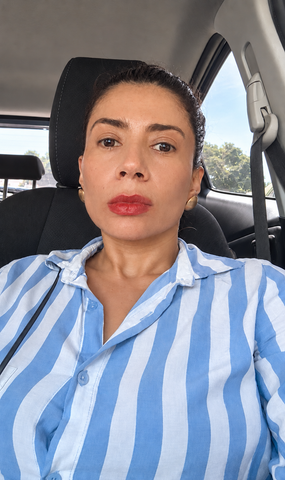
Diana “Lulú” Tolosa is a Colombian traditional cook, historical and cultural researcher, co-author and founding member of El Toque Colombiano. Since 2014, her work has connected hands-on cooking with historical research, documentary sources, territory and digital tools.
Her role within El Toque Colombiano is distinctive. While much of the collective’s knowledge comes from culinary memory and intergenerational practice, Lulú has focused on investigating where preparations come from, how they change over time, why they carry particular names, how they move across territories, and how food intersects with migration, biodiversity, history and cultural identity. el toque colo;biqno qportes cqd…
This role has also been recognised outside the project. Revista Exclama identifies Lulú as responsible for the historical research and writing behind the blog, while Revista MedPlus describes her as leading research into regional Colombian cuisines. EXCLAMA
Cooking as a form of research
Lulú does not approach food only through archives and documents. She cooks.
Her contributions to El Toque Colombiano date back to the project’s earliest years and already reveal a recurring method: begin with a preparation or ingredient and then follow its connections to territory, language, history and cultural exchange.
Her work includes researching traditional preparations, regional ingredients, edible plants and other foods that require comparing oral knowledge with historical, institutional and academic sources.
For her, the kitchen also works as an experimental space: documentary information must eventually confront the material reality of ingredients, texture, fermentation, heat and technique.
Colombian cooking in diaspora
Living outside Colombia created another major line of work.
Lulú has had to reproduce Colombian foods in places where the original varieties of corn, cheese, leaves, flours and other ingredients are often unavailable. This turned diaspora into a practical research question:
What can change in a traditional preparation, and what must remain for its cultural identity to survive?
Diana “Lulú” Tolosa is a Colombian traditional cook, historical and cultural researcher, co-author and founding member of El Toque Colombiano. Since 2014, her work has connected hands-on cooking with historical research, documentary sources, territory and digital tools.
Her role within El Toque Colombiano is distinctive. While much of the collective’s knowledge comes from culinary memory and intergenerational practice, Lulú has focused on investigating where preparations come from, how they change over time, why they carry particular names, how they move across territories, and how food intersects with migration, biodiversity, history and cultural identity. el toque colo;biqno qportes cqd…
This role has also been recognised outside the project. Revista Exclama identifies Lulú as responsible for the historical research and writing behind the blog, while Revista MedPlus describes her as leading research into regional Colombian cuisines. EXCLAMA
Cooking as a form of research
Lulú does not approach food only through archives and documents. She cooks.
Her contributions to El Toque Colombiano date back to the project’s earliest years and already reveal a recurring method: begin with a preparation or ingredient and then follow its connections to territory, language, history and cultural exchange.
Her work includes researching traditional preparations, regional ingredients, edible plants and other foods that require comparing oral knowledge with historical, institutional and academic sources.
For her, the kitchen also works as an experimental space: documentary information must eventually confront the material reality of ingredients, texture, fermentation, heat and technique.
Colombian cooking in diaspora
Living outside Colombia created another major line of work.
Lulú has had to reproduce Colombian foods in places where the original varieties of corn, cheese, leaves, flours and other ingredients are often unavailable. This turned diaspora into a practical research question:
What can change in a traditional preparation, and what must remain for its cultural identity to survive?
El Toque Colombiano documents several examples of this approach through recipes adapted to ingredients available outside Colombia. El Toque Colombiano Her project dossier identifies the adaptation and reproduction of traditional Colombian foods in diaspora as a distinct area of her work.
Her cross-cultural experience extends across North America, Europe and, particularly, several years of life in Morocco, together with experience in culinary environments across North Africa and the Arabian Peninsula, including Saudi Arabia, Oman and the United Arab Emirates.
Diaspora also broadened her cooking beyond Colombia. Through direct exchange with people from other Latin American communities, she has learned and reproduced traditional Mexican, Peruvian and other Latin American preparations. She does not present herself as a bearer of those traditions; instead, this is knowledge acquired through direct cultural exchange people teaching one another by cooking together.
Her experience with Arabic-speaking cultures has also shaped a comparative way of looking at food. An early El Toque Colombiano article on the Colombian almojábana, for example, explored its Arabic linguistic background and compared related preparations across territories. That article was later cited by an independent Colombian food publication. El Toque Colombiano
Researching Colombia’s envueltos
Research into Colombian envueltos became one of the defining projects of her trajectory.
What began as a family conversation developed into a broad investigation of preparations from across Colombia. While Chori Agámez and Heidy Pinto played a major role in locating, reconstructing and cooking recipes, Lulú developed much of the historical and cultural research behind the project.
Her work examined Indigenous precedents, terminology, ingredients, cooking methods and historical transformations. She also developed the Mapa de los Envueltos, a digital map connecting preparations with their regions and tradition bearers. el toque colo;biqno qportes cqd…
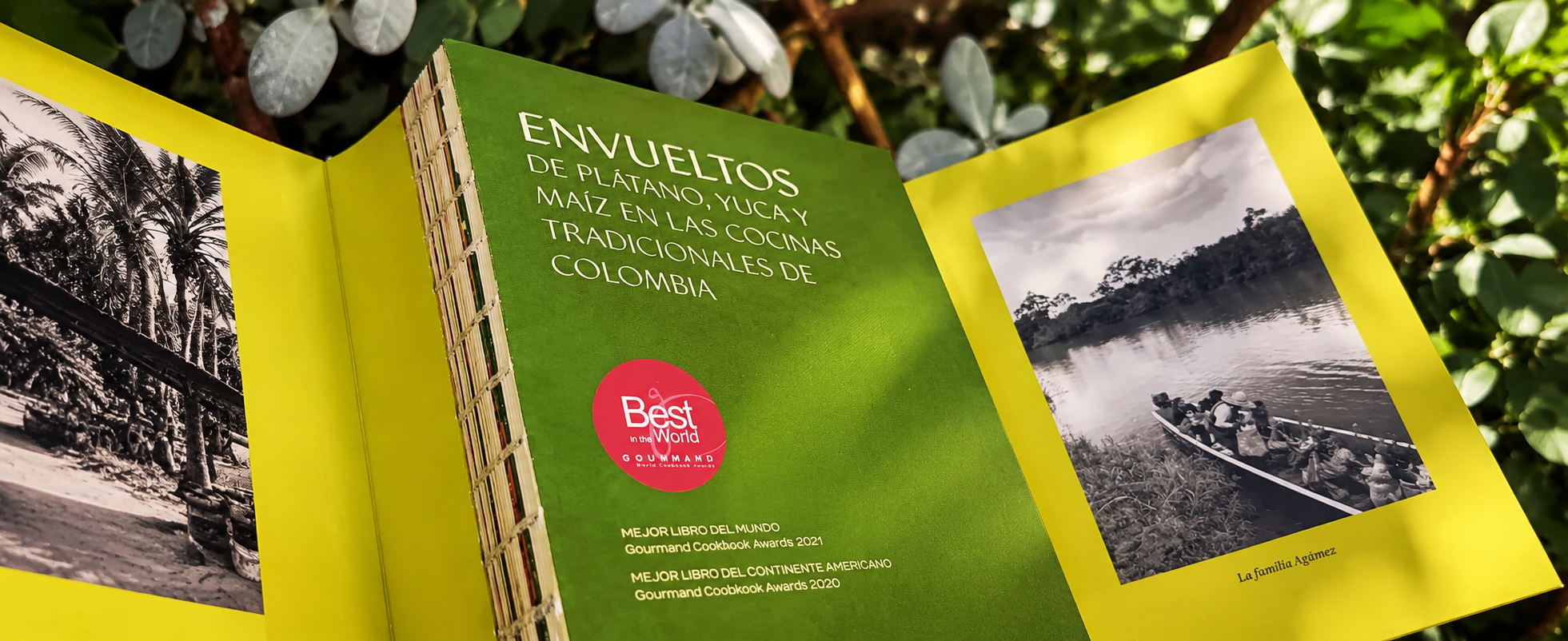
The research became Envueltos de plátano, yuca y maíz en las cocinas tradicionales de Colombia. The current edition recognises Diana “Lulú” Tolosa as co-author alongside Zoraida “Chori” Agámez and Heidy Pinto, with a contribution particularly associated with historical and cultural research, documentation and cartography.
Building food heritage in the digital space
A substantial part of Lulú’s work has taken place behind the visible culinary work.
She has also spent years locating and organising books, theses, institutional publications, inventories and other documentary sources on Colombian food traditions, helping build a digital reference archive for researchers, cooks and readers.
Her work therefore occupies an unusual intersection between traditional cooking, documentary research and digital heritage.
Recognition and Public Trajectory
For many years, a substantial part of Lulú’s contribution took place behind the scenes. Over time, independent sources began to document her role more explicitly.
Revista Exclama identified her as responsible for historical research and writing within El Toque Colombiano, while Revista MedPlus described her as leading research into regional Colombian cuisine. EXCLAMA
Her published research has also begun to circulate as a source beyond the project. Dagusto, for example, cites a 2014 El Toque Colombiano article by “Lulú” in its bibliography for an article on the Colombian almojábana. Dagusto
In 2021, Envueltos received international recognition at the Gourmand World Cookbook Awards. Revista Diners documented the book’s international award and the intergenerational work behind El Toque Colombiano. Revista Diners
In 2024, Diana “Lulú” Tolosa appeared alongside Chori Agámez as a guest expert on MasterChef Celebrity Colombia. Canal RCN presented them as women with extensive knowledge of Colombian cuisine and as masters of Colombian cooking, invited to advise the judges during a challenge devoted to corn, plantain and cassava envueltos. SuperLike
In 2025, Lulú and Heidy Pinto were part of the Barrancabermeja team that presented Bollo Huevos de Pescado at Colombia’s National Traditional Cuisine Award. The project received third place nationally. el toque colo;biqno qportes cqd… Colombia’s Ministry of Cultures officially described the winning group as cooks and researchers safeguarding an ancestral preparation of the Magdalena Medio. Ministerio de Cultura
Her trajectory therefore brings together two dimensions that are sometimes treated separately but, in her work, belong to the same system: cooking tradition and building the context needed to understand and transmit it.
Within El Toque Colombiano, her role can be understood as a bridge:
culinary memory → practice → research → context → documentation → publication → circulation → preservation